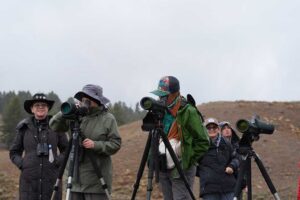

A trophic cascade is what happens when a top predator is removed from or returned to an ecosystem, and the effects ripple through every level below it. In Yellowstone, the reintroduction of wolves in 1995 set off one of the most closely studied trophic cascades in ecological history. It is the reason why, standing in Lamar Valley on a women’s wildlife expedition in Yellowstone today, you are seeing a landscape that is measurably different from the one that existed before the wolves came back. Her Wild Life is a women’s adventure travel company built on field biology, and this is the story that underpins everything the Yellowstone expedition is about.
What Is a Trophic Cascade?
The word trophic refers to the levels of a food chain: plants, then the animals that eat them, then the predators that eat those animals. A cascade describes what happens when a change at one level travels down through the others. The idea that predators could restructure ecosystems from the top down, rather than ecosystems building from plants upward, was considered radical when ecologist Aldo Leopold first proposed it in his 1949 essay Thinking Like a Mountain. Yellowstone became the first large-scale test of whether it was true.
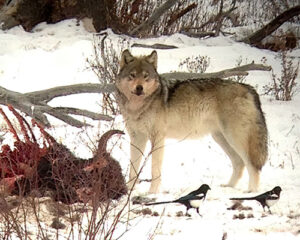
What Happened When Wolves Returned to Yellowstone?
When wolves were removed from Yellowstone in the 1920s, elk herds lost their primary predator. Without pressure to keep moving, elk grazed riverbanks heavily and repeatedly, removing the willow, aspen, and cottonwood that held streambanks together. When wolves were reintroduced in 1995, the mechanism that changed the landscape was primarily behavioural rather than numerical. Wolves did not simply reduce elk numbers. They changed where elk were willing to stand still. Elk stopped lingering in open valley bottoms and river corridors where visibility was poor, and escape was difficult.
With elk grazing pressure reduced in those areas, willow and aspen began to recover. Recovering vegetation stabilised stream banks, which changed the rate at which rivers eroded their channels. Beavers returned to areas where the willow they depend on had grown back. Beaver dams slowed water flow, raised water tables, and created wetland habitat that supported populations of songbirds, waterfowl, and amphibians that had not been present for decades. The NPS notes that researchers continue to study how extensive this cascade is and whether other factors, including climate, are also at work. The research is ongoing.
Why This Changes How You See Yellowstone
Understanding the trophic cascade changes what you look for in the landscape. The willows along a Lamar Valley stream are not just willows. They are evidence of a predator’s return. A beaver dam is a downstream consequence of wolf behaviour. A river running clear over a stable bed is the result of roots that grew back because elk changed where they grazed. It connects everything you see in a single day in the field. For more on the wolves themselves, see our post on wolf facts in Yellowstone. Visit our US expeditions page for the full range of women’s wildlife travel in the United States, including Yellowstone, Kodiak, and Nebraska.