


Wildlife Tours in the USA for Women — Expert-Led, Timed for the Wild
Half a million sandhill cranes lift from the Platte River before dawn in March. In September, Kodiak bears fish the salmon run. In October, the wolves come back to the valleys.
The United States holds some of the most extraordinary wildlife events in the natural world. The problem has never been finding them. It has been knowing when to go, where to stand, and who to be there with when it happens. Her Wild Life builds every US expedition around that knowledge. Every wildlife tour’s departure is timed to the biological moment that makes each destination extraordinary.
Her Wild Life offers three US expeditions: sandhill crane migration in Nebraska in spring, Kodiak brown bears on an Alaskan island, and wolves in Yellowstone. All three are women-only, all three run with small groups, and all three are led by expert female naturalists who know their ecosystems at depth. Your own private room is always included. No single supplement.
Nearly 20 years of conservation travel | Official ZEISS Optics Partner | A Reefs to Rockies Brand

Why the United States
Within a single nation, you can stand in a coastal temperate rainforest on an Alaskan island, watch wolves reshape a river valley in Wyoming, and observe the largest migratory bird gathering in North America on a Nebraska sandbar.
What makes the US exceptional for women’s wildlife travel is not just species diversity but the concentration of specific, predictable, high-intensity wildlife events that happen on a biological clock. Salmon runs that draw Kodiak brown bears to the same rivers each September. Sandhill crane migrations have followed the Platte River corridor for millions of years. Wolf packs in Yellowstone that are most visible in October when the elk rut ends and the park empties of summer visitors. These are not chance encounters. Her Wild Life schedules every US departure around these biological windows, not around convenient travel dates.
When to Go: Wildlife Timing Across the United States
March is crane season in Nebraska. Over half a million sandhill cranes stage on the Platte River in one of the most concentrated wildlife spectacles in the Western Hemisphere, fueling up for the final leg of their migration north. September is when Kodiak bears are in hyperphagia, consuming tens of thousands of calories daily as the salmon run peaks on the rivers of Kodiak Island. October is when Yellowstone belongs to wildlife: the elk rut winds down, bears are fattening before winter, and the wolves move through the valleys in the quiet the park rarely offers in summer.
What Makes the United States Different From Other Wildlife Destinations
In the US, you can access a wilderness of genuine ecological scale without significant logistical complexity, language barriers, or remote travel infrastructure. For anyone looking for solo trips for women in the US, this matters practically: the field is accessible, the logistics are clean, and the expertise Her Wild Life brings is focused entirely on the wildlife rather than on managing travel complexity. Three of the most extraordinary wildlife events in North America, in three of the country’s most ecologically significant landscapes, all within reach of women traveling alone or in a small group.
Her Wild Life United States Expeditions — Find Your Wildlife Window
Three ecosystems, three seasons, three of the most extraordinary wildlife events in North America. Each departure is timed to the biological peak of its specific wildlife event.
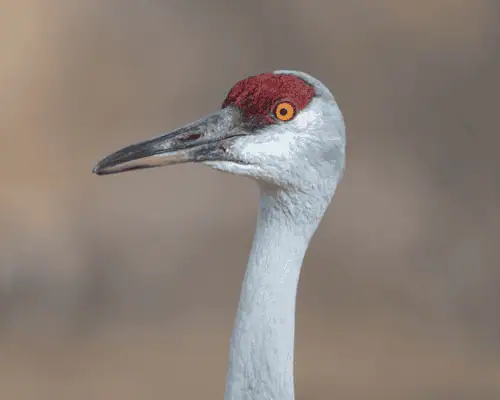
Nebraska Spring Magic
Half a million sandhill cranes on the Platte River at peak migration. One of the most concentrated wildlife spectacles in the Western Hemisphere, observed from purpose-built blinds at dawn.
Location: Platte River Valley, Nebraska
Group: 5 to 7 women | Private room included | No single supplement
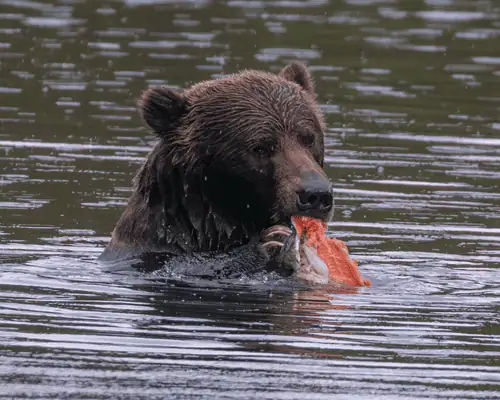
Kodiak, Alaska
Kodiak brown bears fishing the fall salmon run on one of Alaska’s most remote and ecologically significant islands. Puffins, sea otters, bald eagles, emperor geese, and coastal whales in the same expedition window.
Location: Kodiak Archipelago, southwest Alaska
Group: 4 to 6 women | Private room included | No single supplement
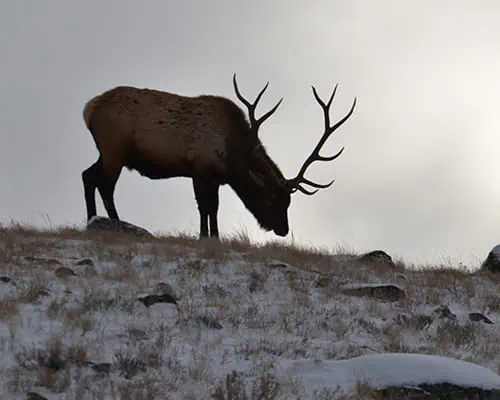
Yellowstone National Park
Wolves, bears, bison, elk, and moose in October, when the elk rut winds down, the summer crowds are gone, and the park returns to the wildlife that defines it.
Location: Yellowstone National Park, Wyoming
Group: 4 to 6 women | Private room included | No single supplement
Wildlife You’ll Encounter on Her Wild Life’s US Expeditions
These are the species the expeditions are designed and timed around. Each one is here because of the specific ecology of its destination, not because it is a crowd-pleaser.
Sandhill Crane (Antigone canadensis) — Nebraska, March
Over 500,000 sandhill cranes converge on a 70-mile stretch of the Platte River each spring. The sound of the fly-in at dusk is audible from the blinds before the sky fills with birds.
Read more: Sandhill crane migration ecology and why the Platte River matters
Sandhill cranes have used the Platte River corridor as a migration staging site for an estimated nine to ten million years. The river’s shallow braided channels provide safe, predator-resistant roosting habitat at night. By day, the cranes disperse into surrounding cornfields to forage on waste grain, consuming the calories they need to fuel the final leg of migration to Arctic and sub-Arctic breeding grounds. The staging stop on the Platte is not optional: cranes that fail to accumulate sufficient fat reserves here do not complete the migration. Over half a million individuals use a stretch of river approximately 70 miles long. Her Wild Life guides the Nebraska expedition from purpose-built wildlife blinds, timed to peak concentration in mid-March. Prairie chicken viewing on leks in the surrounding grassland adds a second distinct spectacle to the same departure window.
Kodiak Brown Bear (Ursus arctos middendorffi) — Kodiak Island, September
Among the largest land predators on Earth, Kodiak brown bears reach their peak activity in September as the salmon run drives them into hyperphagia. Adult males can weigh up to 1,500 pounds at the height of the run.
Read more: Kodiak bear ecology, hyperphagia, and the marine-to-forest nutrient transfer
Kodiak brown bears are the largest brown bear subspecies, a size that reflects the extraordinary productivity of Kodiak Island’s salmon runs rather than simple genetics. During hyperphagia, the physiological state of pre-denning caloric accumulation, individual bears may consume tens of thousands of calories daily. The salmon carcasses they leave behind at river mouths and in the surrounding forest carry marine-derived nitrogen into the soil. Studies have found oceanic nutrients in the growth rings of trees far from any river, transferred inland by bear foraging behavior across the boundary between marine and terrestrial ecosystems. Bears are not just large predators. They are ecosystem engineers connecting the productivity of the Pacific Ocean to the biomass of the Kodiak forest. Michelle Theall, who leads the Kodiak expedition, knows this island by what moves, what is missing, and what the light is doing at 5am before anyone else is awake.
Gray Wolf (Canis lupus) — Yellowstone National Park, October
Gray wolves were reintroduced to Yellowstone in 1995. What followed is the most documented trophic cascade in modern conservation: wolves changed elk behavior, elk behavior allowed vegetation to recover, vegetation stabilised riverbanks, and riverbanks changed the course of rivers.
Read more: The Yellowstone wolf reintroduction and the trophic cascade that followed
The 1995 reintroduction of gray wolves to Yellowstone produced ecological changes that researchers are still documenting. Before wolves returned, elk grazed freely in the river valleys, overgrazing the willows and aspens that stabilised the streambanks. Wolves changed elk behavior: elk moved more frequently, avoided lingering in the open valleys, and allowed riparian vegetation to recover. Recovered vegetation stabilised streambanks. Stabilised streambanks changed the physical course of rivers. A single predator species, restored to its ecological role after a 70-year absence, reshaped the physical geography of the landscape around it. This is what Cara McGary explains to women watching a wolf in the Lamar Valley in October: not just what you are looking at, but what it means that it is there.
American Bison (Bison bison) — Yellowstone National Park, October
North America’s largest land mammal. By 1889, hunting had reduced the continental population to fewer than 1,000 individuals. Yellowstone’s herd never went extinct, and it became the genetic foundation for the species’ recovery.
Read more: Bison ecology, their role as ecosystem engineers, and October behavior in Yellowstone
American bison once numbered in the tens of millions across the continent’s grasslands. By the late 19th century, systematic hunting had reduced that population to near-extinction. Yellowstone’s isolated herd survived, and from that remnant population, a continental recovery was built. Today approximately 4,500 bison move through Yellowstone in seasonal patterns that have not fundamentally changed since before European contact: summer on the high plateaus, fall movement to the valleys, winter foraging in the geothermally heated ground where snow is shallow. In October, bison are highly visible in the Lamar and Hayden valleys. Their grazing prevents any single plant species from dominating the grassland, their wallows create microhabitats for insects and birds, and their winter foraging exposes forage that other grazers depend on. Cara McGary translates this ecological context for every woman who watches a bison herd cross a valley at first light.
Horned Puffin (Fratercula corniculata) — Kodiak Island, September
Horned puffins nest in dense cliffside colonies along Kodiak’s coast, returning to the same burrow each breeding season. They are birds of two worlds: ungainly on land, precise and powerful underwater.
Read more: Puffin ecology and what healthy puffin colonies indicate about marine ecosystem health
Horned puffins use their wings to fly underwater, pursuing sand lance and herring with the precision of an aerial hunter adapted to a liquid medium. Their orange-red bills reach peak brightness in breeding season. Puffin colony health is a direct indicator of forage fish abundance, which is itself an indicator of broader marine ecosystem function: when puffins are thriving, the cold-water food web that supports them is intact. When the colonies struggle, it signals declines in the fish populations that sustain the entire Kodiak coastal ecosystem. Observed from a boat along Kodiak’s coastline, against a backdrop of kelp forest and sea otter habitat, puffins are not a sideshow to the bear expedition. They are part of the same ecological story: the productivity of the Pacific Ocean made visible in the lives of species at every level of the food web.
Solo Female Travel in the USA — Wildlife Expeditions Built Around You
Most women who join Her Wild Life US expeditions arrive not knowing anyone else in the group. That is the norm, not the exception. They are women who have been planning this trip for years, often forwarding itinerary links to friends who never commit, until they decide to go without waiting. Solo female travel in the USA with Her Wild Life is how you see the things you have been wanting to see, with a small group of women who want the same things, led by someone who knows when and where the wildlife will be.
You are not joining a tour group. You are joining a specific wildlife expedition in a specific ecosystem at a specific biological moment that makes the experience what it is. The crane fly-in at the Platte in mid-March. The bears on the Kodiak rivers in September. The wolves in the Lamar Valley in October, when the park is finally quiet. Solo female travel in the United States with Her Wild Life is not a consolation for traveling alone. It is often the reason women describe it as the best trip they have taken.
Private Rooms — No Single Supplement, No Compromise
Solo travel typically comes with a fee for being alone. Her Wild Life does not charge one. Private rooms are standard on every US expedition, included in the trip price. After a full day in the field starting before dawn, having your own space to rest, review what you saw, and prepare for the next early start is part of how we design the experience.
4 to 7 Women. Small Enough to Matter in the Field.
Her Wild Life US expeditions run with 4 to 7 women. Small enough that no one disappears at the back. Small enough that the guide adjusts the day in real time based on what she is reading in the field. Small enough that when a wolf appears on the ridge above the Lamar Valley, every woman in the group has an unobstructed view and a guide explaining what it means that the wolf is there.
Wildlife Photography in the USA — The Right Place at the Right Moment
Wildlife photography tours in the USA with Her Wild Life serve two kinds of photographers: women who photograph seriously and want to be in the right place with the right light when the wildlife is most active, and women who photograph as a form of paying attention, of recording what they are seeing with precision and intention. Both are served by the same expedition structure. What creates the photographic opportunity in each case is not equipment or technique. It is field biology: being in the right ecosystem at the right biological moment because the guide knows when that moment arrives.
Michelle Theall — Wildlife Photography, Kodiak Alaska
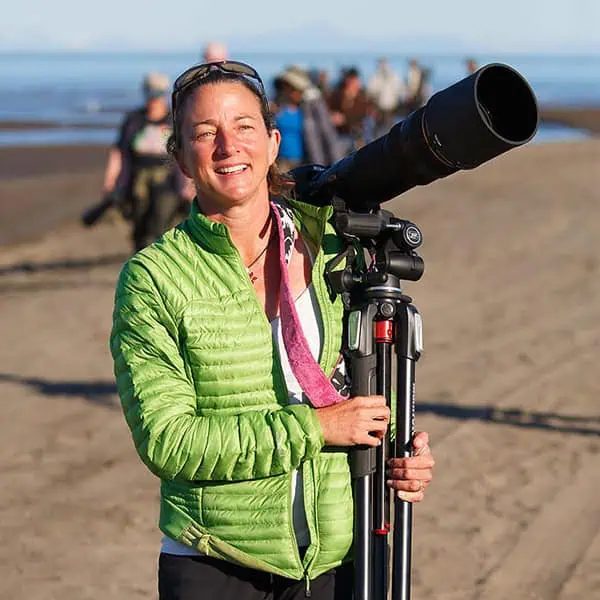
Michelle Theall leads the Kodiak expedition and brings a specific background in wildlife photography alongside years of experience with Kodiak brown bears and Alaskan coastal ecosystems. She knows Kodiak by what is moving, what is missing, and what the light is doing at 5am before anyone else is awake. The photographic encounters on the Kodiak departure are the result of that knowledge, not of luck or proximity.
Conservation in the United States — What We Support and Why It Matters
A conservation donation is made on behalf of every woman who travels with Her Wild Life. In the United States, that contribution is connected to specific, active conservation work in the ecosystems our expeditions enter. The sandhill crane migration on the Platte River exists in part because the river’s shallow braided channels have been actively managed and protected for decades. Kodiak brown bears are thriving because the Kodiak National Wildlife Refuge has kept the island’s salmon habitat intact. Yellowstone’s wolves are there because of a deliberate, contested, and ultimately transformative reintroduction program that began in 1995 and produced one of the most significant conservation outcomes of the twentieth century.
Your travel is connected to these conservation efforts, not separate from them.
Specific, Accountable Conservation Practice.
Her Wild Life brings nearly twenty years of conservation-centered, sustainable travel practice to every expedition. Named local partners in each US destination, responsible viewing protocols specific to each species and setting, and a conservation donation with every booking. This is not a general commitment. It is a specific, verifiable practice.
Responsible Wildlife Viewing on US Expeditions
Bear viewing on Kodiak follows safe approach distance protocols that protect natural feeding behavior. Crane viewing is conducted from purpose-built blinds that minimize disturbance during the critical pre-migration roosting period: viewing from a blind is what puts you inside the fly-in rather than watching it scatter. Wolf observation in Yellowstone follows National Park Service guidelines, led by a guide who understands how human presence affects pack behavior in specific terrain. In every case, the responsible viewing protocol is not a restriction on the experience. It is the reason the experience is as close and as natural as it is.
“Every departure is timed around field biology — when species are most active, when the light is best, when the wild is most alive.”
Expert Women Who Know the American Wild
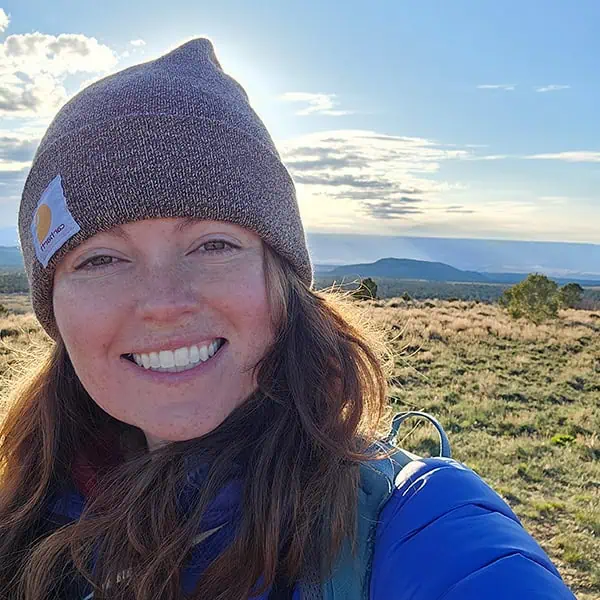
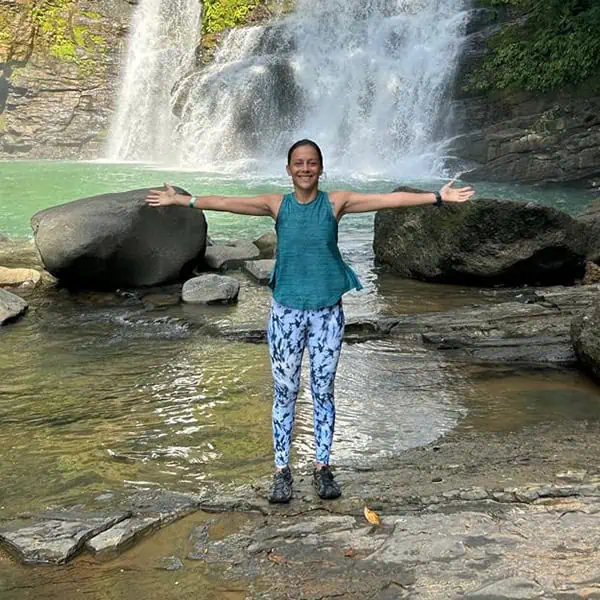
The difference between a good wildlife expedition and an extraordinary one almost always comes down to the guide. Not just someone who knows the area, but someone who knows the timing: who reads field conditions in real time, sees the pattern break before anyone else, and gets the group in the right position before the wildlife does what it was about to do anyway. Her Wild Life’s guides are women with specific field credentials in the ecosystems where we take you.
Her Wild Life guides bring diverse backgrounds, global perspectives, and a shared love of adventure to every expedition.

Cara McGary
Michelle Theall
Carly Crow
Arlet Quirós Calvo

Naara Arroyo
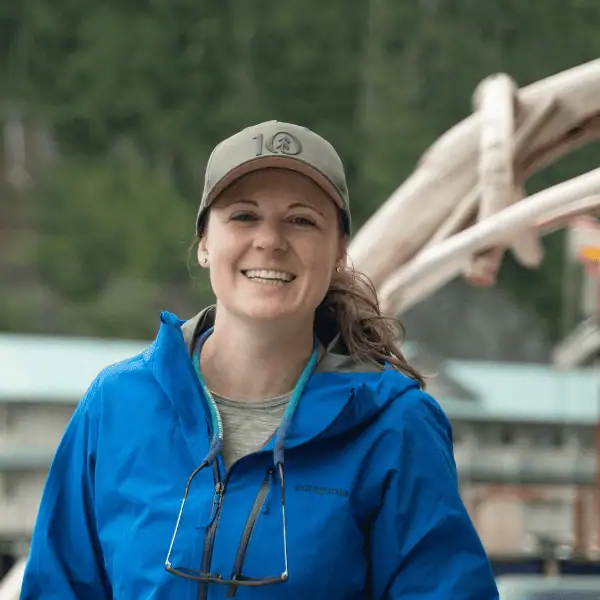
Pam McGarel
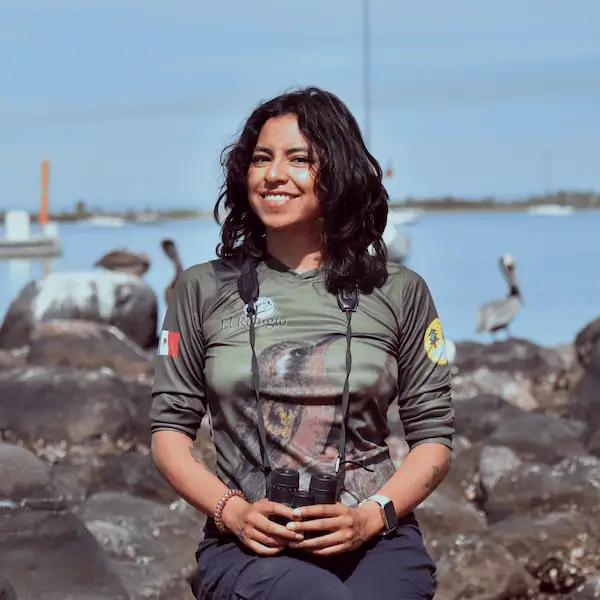
Pamela García
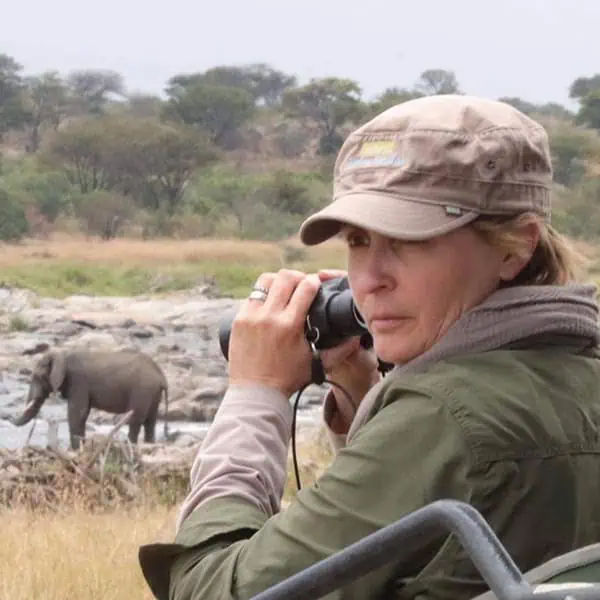
Sheridan Samano
Planning Your United States Wildlife Trip — What to Know
Best Time to Visit the United States for Wildlife
Three departure windows across three seasons. Nebraska in late February through March, peak mid-March, for the sandhill crane migration. Kodiak in September for bears in hyperphagia and the salmon run at full intensity. Yellowstone in October for wolves and large mammals when the park is crowd-free and the wildlife is most active.
Read more: The biological reasons behind each departure window
Each Her Wild Life US departure window exists because the wildlife dictates it, not because the dates are convenient. Nebraska in mid-March is the peak of crane staging on the Platte: before mid-March the migration is building, after late March the cranes have moved north. The window when half a million birds are concentrated on a 70-mile stretch of river is specific and brief. Kodiak in September is the heart of the salmon run and the peak of bear hyperphagia: bears are fishing the rivers from dawn, the puffins are still present, and the coastal weather, while variable, is at its most manageable. Yellowstone in October follows the elk rut: the rut draws wolves to the valleys in late September, and October brings the quiet that allows sustained observation of large mammal behavior that summer crowds make impossible.
Activity Level and Physical Requirements
Nebraska is moderate: early morning walks across flat terrain to reach the viewing blinds, pre-dawn starts, and extended time in the cold before dawn warms. Kodiak is moderate to active: coastal boat travel, walking on uneven ground, and Alaskan coastal weather that requires preparation. Yellowstone is moderate: primarily vehicle-based between locations with walking at each site.
Read more: Specific physical demands for each US expedition
Nebraska requires primarily the willingness to be outside in the dark and cold before dawn. The terrain is flat and the distances are short. The challenge is sensory, not physical: standing still in a blind in sub-freezing temperatures before the cranes begin to move. Kodiak involves more physical engagement: the coastal terrain is uneven, the boat travel introduces variable sea conditions, and the Alaskan coastal climate in September ranges from clear and mild to rainy and cold within the same day. Participants should be comfortable with uneven terrain and variable weather. Yellowstone requires the least physical output: most of the expedition is conducted from vehicles, with walking at stops. The elevation is significant and the October temperatures range from cold nights to warm midday sun.
What to Pack for US Wildlife Expeditions
All three US expeditions require layering. Alaska in September: temperatures mid-30s to low 50s, coastal wind, waterproof outer layer essential. Nebraska in March: below freezing before dawn, warming through the day, thermal base layer, and windproof shell for the blind. Yellowstone in October: high altitude autumn, cold mornings and evenings, warm midday sun. Binoculars and field footwear across all three.
Read more: Full packing guidance for each US expedition
For all three US expeditions, the base requirement is a quality layering system: a moisture-wicking base layer, a warm mid-layer, waterproof and windproof outer shell. Binoculars are essential at all three destinations. Field footwear suited to uneven terrain is needed for Kodiak and Yellowstone. For Nebraska specifically, handwarmers and a good sitting cushion for extended blind time in the pre-dawn cold make a significant difference to the experience. For Kodiak, waterproof footwear with ankle support is needed for coastal terrain and potential boat landings.
What Women Say About Her Wild Life’s US Expeditions
Frequently Asked Questions — Wildlife Tours in the USA for Women
Which US expedition should I book first?
That depends on what you have been wanting to see the longest. Nebraska in March is for the woman who has been reading about the sandhill crane migration for years and wants to stand inside it. Kodiak in September is for the woman who wants to watch one of the largest land predators on Earth fish a salmon run on an island that very few people visit. Yellowstone in October is for the woman who wants to understand the wolf reintroduction story not just intellectually but ecologically, standing in the valley where it happened. All three are extraordinary. All three are best experienced as separate departures. Contact Her Wild Life if you want a conversation about which one fits your timing and your wildlife priorities.
Is solo female travel in the United States safe on these expeditions?
All three Her Wild Life US expeditions are structured group departures. Every transfer, field movement, and accommodation is managed by the guide team. Participants are never navigating independently. The United States national park system provides well-established infrastructure and safety frameworks, and Her Wild Life’s guide team operates within those frameworks while bringing specific field biology expertise that general park visitors do not have access to. Her Wild Life has operated solo trips for women in US national parks and wilderness areas across multiple seasons with an established safety record.
What is the best time to visit Yellowstone National Park for wolves?
October is the best month for wolf observation in Yellowstone. The elk rut winds down in late September, which moves the wolf packs from the ridgelines back down into the open valleys where observation is possible. The summer visitor numbers have dropped significantly by October, reducing vehicle and human disturbance in key viewing areas. Bears are in pre-winter hyperphagia and highly active in the same valleys. The park is at its most wildlife-active and least crowded in October, which is why Her Wild Life schedules the Yellowstone expedition specifically to this window.
When do sandhill cranes arrive in Nebraska?
Sandhill cranes begin arriving at the Platte River staging area in late February, with numbers building through early March. Peak concentration, when over 500,000 birds are present on a 70-mile stretch of the river, occurs around mid-March. By late March the cranes have begun moving north and colony concentration declines. Her Wild Life’s Nebraska departure is timed to the peak of mid-March, when the spectacle is at its most concentrated and the crane foraging and roosting behavior is at its most active and visible.
Are Kodiak bears bigger than polar bears?
Adult male Kodiak brown bears and adult male polar bears are comparable in size, with both reaching weights of 1,000 to 1,500 pounds in large individuals. Kodiak bears are the largest subspecies of brown bear and are considered among the largest land predators on Earth. The size comparison between the two species varies depending on the individual, the season, and the measurement method. What is consistent is that Kodiak brown bears are genuinely enormous animals, and observing them at close range on a salmon river in September — when they are in hyperphagia and maximally active — is an encounter that has no equivalent in the contiguous United States.
What makes wildlife photography tours USA with Her Wild Life different?
The photography opportunities on Her Wild Life US expeditions are a direct consequence of field biology timing, not of proximity or managed viewing conditions. The cranes are on the Platte because migration timing has not changed in millions of years. The bears are on the Kodiak rivers because the salmon are running. The wolves are in the Lamar Valley because the elk rut has ended. A guide who understands field biology knows all of this before she arrives and positions the group in the right place before the wildlife moment happens. Michelle Theall on the Kodiak expedition brings a specific wildlife photography background alongside years of bear behavior expertise. Her Wild Life does not offer photography instruction. It offers field biology expertise that produces photographic encounters as a natural consequence.
Do I need to be very fit for these expeditions?
Not for most of the US expeditions. Nebraska is the most physically accessible: flat terrain, short distances, early starts. Yellowstone is primarily vehicle-based with moderate walking. Kodiak is the most physically demanding of the three, with coastal boat travel, variable Alaskan weather, and uneven terrain on foot. None of the three require athletic fitness. What they require is the ability to be outside in variable field conditions, often starting before dawn, for extended periods. Her Wild Life discusses specific physical requirements with every traveler before booking and will help you identify which expedition is the right fit.
Can I do more than one US expedition on the same trip?
The three US expeditions run in separate seasons: Nebraska in late winter and spring, Kodiak in September, Yellowstone in October. Combining two in the same year is possible if you plan far enough ahead, particularly Kodiak in September and Yellowstone in October, which run in consecutive months. Her Wild Life manages each expedition as a separate departure. Contact us to discuss timing and booking for multiple US expeditions.
How do I choose between the three US expeditions?
Three different ecosystems, three different seasons, three different field experiences. Nebraska in March is about scale and sound: the largest migratory bird gathering in North America, observed from a blind at dawn. Kodiak in September is about individual encounter: one of the world’s largest land predators, fishing a salmon run on an island most people never visit. Yellowstone in October is about ecological understanding: watching a landscape where the reintroduction of a single predator species reshaped the physical geography, explained by a guide who has spent years studying it. The common thread across all three women’s adventure travel expeditions is field biology expertise, women-only small groups, and private rooms with no single supplement. The question is which wildlife event has been on your list the longest. Her Wild Life is happy to have that conversation before you book.
Where is the best place to travel in the US as a solo female?
The US has some of the world’s most extraordinary wildlife destinations, and Her Wild Life runs expert-led expeditions across three of them. Yellowstone in October puts you in the field during peak wolf and bear activity. The Platte River Valley in Nebraska draws half a million sandhill cranes each spring. Kodiak, Alaska in September is brown bears, puffins, and coastal wildlife at their most concentrated. For women researching solo female travel United States experiences, Her Wild Life’s women-only, expert-led expeditions mean private rooms, small groups, and no logistics to figure out alone.
Lucy H
Mar 25, 2026

This was my first trip to Nebraska, and seeing the country from the comfort of the van was great. The sandhill migration is absolutely amazing and beautiful. The prairie-chicken viewing was an additional bonus. Traveling with Sheridan as a guide is always a positive experience—-she is organized and SO knowledgeable!
Elizabeth T
Mar 25, 2026
This was my first trip to Nebraska, and seeing the country from the comfort of the van was great. The sandhill migration is absolutely amazing and beautiful. The prairie-chicken viewing was an additional bonus. Traveling with Sheridan as a guide is always a positive experience—-she is organized and SO knowledgeable!
Laurie G
Mar 24, 2026
This was such an amazing experience. Sheridan is so capable, so knowledgeable about the birds and the community resources along the way. The small group and Sheridan's respect of each of our wants and needs made for such a relaxing trip. Also, Sheridan's respect for the wildlife and the people and businesses in the communities was a model for how to journey in the world. Her local sources for sandhill crane watching and greater prairie chicken leks made it very special. I'm still basking in the total experience. Laurie
Debby M
Mar 29, 2024
Tornados of sandhill cranes surrounding us near North Platte. The magic of dawn on a Greater Prairie Chicken Lek full of booming, foot stomping and sparring. The best of nature experienced with great traveling companions. Comfortable riding and viewing on the Roaming Bison Safari Vehicle. Every detail taken care of- Sheridan you are amazing.
Delaney V
Apr 1, 2025
The dancing chickens trip was a 10/10 experience. The chickens did not disappoint. Our guide, Carly, was absolutely amazing. She’s an endless encyclopedia of bird knowledge, an excellent spotter, and just a joy to be around. I would absolutely do another trip with Reefs to Rockies.
Martha F
Apr 16, 2025
The grouse were spectacular at unique leks. I really liked meeting the ranch owner and her beavers and cattle and amateur archeologist friend. Both guides were skillful at finding and identifying the birds by sight and sound. They were patient in telling us repeatedly what that bird was. The Roaming Bison vehicle provided special opportunities to observe the birds without spooking them.
Gayle L
Apr 6, 2025
Amazing trip to see amazing birds. Fun trip "discovering" Nebraska. I have a new appreciation for this "flyover" -state Ogallala, North Platte & McCook showed us their hospitality and their birds!
Lynne M
Apr 05, 2025
We had a fabulous time on this trip. Not only did we see spectacular views of Sandhill cranes and greater prairie chickens but made great friendships.
Kara C
Apr 2, 2025
Spring Magic was magical! Our guide was extremely knowledgeable about the birds we were seeing and also about the locations we visited. Everything about this trip was just wonderful!
Christina C
Mar 30, 2024
Terrific guide—knowledgeable, funny, caring, great bird spotter. Greater Prairie chickens and Sandhill Cranes on Platte River amazing. Fun and memorable five days.
Linda E
Mar 29, 2024
Great to discover birding on the back roads of Nebraska. Definitely my kind of trip. Like to be off the beaten path. Attendees were so knowledgeable and patient with me as a novice. Comfortable transportation, hotels with lots of beer and snacks. Who could ask for more!
Ready to Experience the American Wild?
Three expeditions. Three ecosystems. Three of the most extraordinary wildlife events in North America, each timed to its biological peak. Small groups, expert female naturalists, private rooms always included.
The cranes will be on the Platte in March. The bears will be on the Kodiak rivers in September. The wolves will be in the Lamar Valley in October. Her Wild Life puts you inside each of these moments. Get in touch and we will tell you honestly which one is right for you.