


Wildlife Tours In Central America for Women — Into the Rainforest with Expert Female Naturalists
The Osa Peninsula contains half of Costa Rica’s species in three percent of its land. Arlet Quirós Calvo has spent years learning where they are.
Central America sits at the meeting point of North and South America’s biodiversity. As the land bridge between two continents, it has allowed species to move, mix, and evolve for millions of years. The result is a region where a single morning’s walk through primary rainforest produces more species observations than most wildlife destinations can offer across an entire trip.
Her Wild Life’s Central America wildlife tours are women-only, led by expert female naturalists, and built around field biology rather than tourist infrastructure. Right now, we operate in Costa Rica on the Osa Peninsula, one of the most species-dense lowland rainforests in the neotropical world, led by resident biologist and field ornithologist Arlet Quirós Calvo. Small groups. Private rooms always included. No single supplement.
If you have been looking for wildlife tours in Central America for women that are guided by someone who knows the ecosystem at field biology depth, you are at the right place.
Nearly 20 years of conservation travel | Official ZEISS Optics Partner | A Reefs to Rockies Brand


Why Central America
Central America holds an extraordinary concentration of biodiversity for its size. Costa Rica alone contains roughly half a million species in a country smaller than West Virginia. That density reflects the region’s position as a land bridge between two continents: species from both North and South America have been meeting, adapting, and diversifying here across deep evolutionary time. The result is layered complexity in every ecosystem, from lowland tropical rainforest and mangrove coast to cloud forest and highland woodland.
Her Wild Life is drawn to Central America for the same reason field biologists return here across careers: the wildlife is extraordinary, the ecosystems are intact enough in key areas to still function as they evolved to function, and the opportunity to observe species interactions and ecological relationships that have been disrupted elsewhere is genuinely available here. Every Her Wild Life expedition in Central America is built around a specific ecosystem and led by a guide with specific expertise in it.
When to Go: Wildlife Timing in Central America
Wildlife timing in Central America varies by destination. In Costa Rica’s Osa Peninsula, the dry season from December through April provides the best trail conditions and visibility, while the wet season brings sea turtle nesting and peak amphibian diversity. Her Wild Life schedules every Central America departure to the biological window that best suits the specific ecosystem and species.
What Makes Central America Different From Other Wildlife Destinations
The neotropical rainforests of Central America are among the most biologically complex ecosystems on Earth. Species richness per hectare in intact primary forest here exceeds most other wildlife destinations globally. What Her Wild Life adds is the field biology expertise to navigate that complexity: guides who know which forest zones hold which species at what time of day, and who can read the behavioral cues that turn a rainforest walk into a field expedition.
Her Wild Life Central America Expeditions — Women-Only, Wildlife-First
Her Wild Life currently operates one Central America expedition, on the Osa Peninsula of Costa Rica.
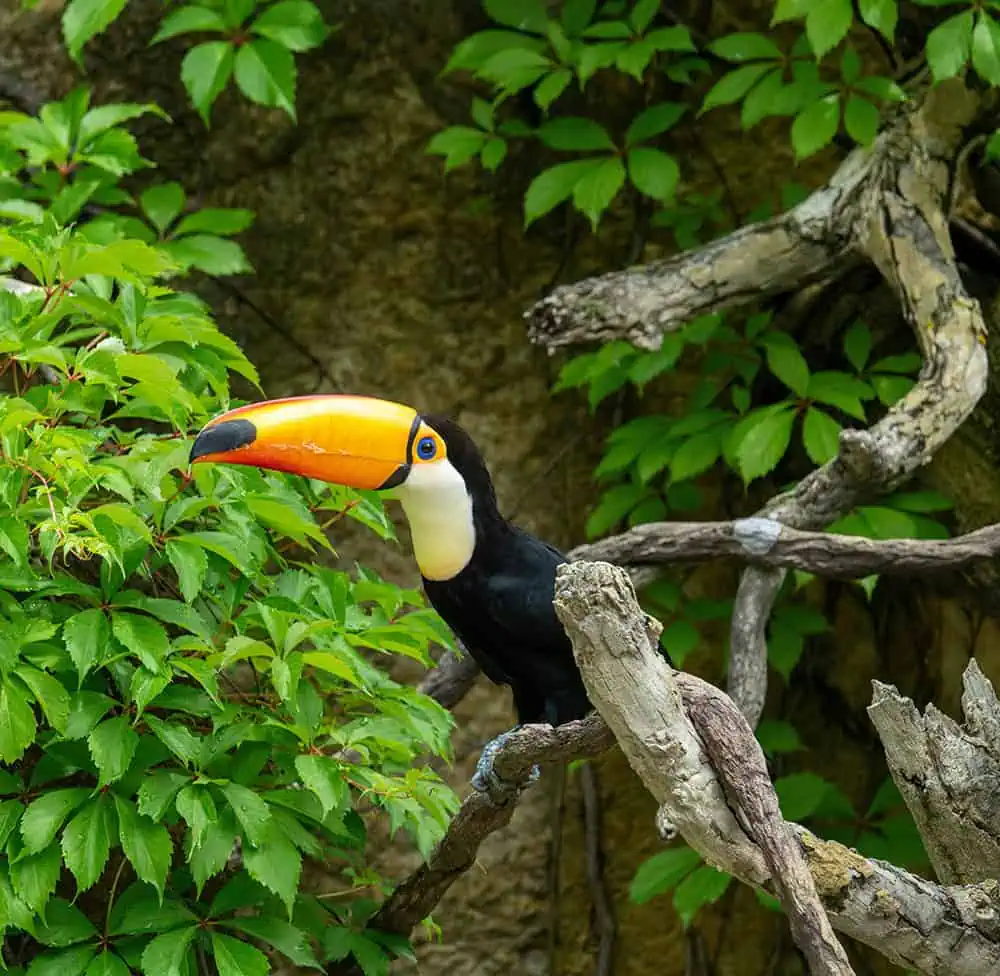
Costa Rica — Osa Peninsula
A biodiversity expedition in one of the most species-dense lowland rainforests in the neotropical region, led by resident biologist and field ornithologist Arlet Quirós Calvo. Four monkey species, Baird’s tapir, scarlet macaws, poison dart frogs, and nearly 500 bird species in and around Corcovado National Park.
Location: Osa Peninsula, San Gerardo de Dota, San José
Group: Up to 10 women | Private room included | No single supplement
Wildlife You’ll Encounter on Her Wild Life’s Central America Expeditions
Central America’s neotropical ecosystems hold species that have evolved in layers of ecological complexity over millions of years. The species profiled below are the field biology encounters our current Central America expedition is built around.
Scarlet Macaw (Ara macao) — Costa Rica, Osa Peninsula
The Osa Peninsula holds one of the highest densities of scarlet macaws in Central America. They move in mated pairs through the primary forest canopy and are among the most reliable indicators of an intact, functioning ecosystem.
Read more: Scarlet macaw ecology, social behavior, and what their presence indicates about forest health
Scarlet macaws mate for life and require large areas of undisturbed primary forest for viable breeding populations. They feed on seeds, fruits, and nuts, consuming unripe fruits most species cannot digest and dispersing seeds across wide forest areas in the process. In the Osa Peninsula, macaw numbers are high because Corcovado National Park and surrounding reserves have maintained the forest cover the species needs. Their presence in high numbers is a direct ecological indicator of forest integrity. On the Costa Rica expedition, macaws are not a species to search for. They are part of the daily soundscape from the first morning in the field.
Baird’s Tapir (Tapirus bairdii) — Costa Rica, Osa Peninsula
The largest native land mammal in Central America. Classified as Endangered, with the Osa Peninsula holding one of the highest density populations remaining anywhere in the region.
Read more: Tapir ecology, forest engineering role, and why the Osa is where they persist
Baird’s tapir is classified as Endangered on the IUCN Red List. It requires large tracts of intact lowland tropical forest, which is why the Osa Peninsula, with Corcovado National Park at its core, is one of the last places in Central America where the species persists in meaningful numbers. Tapirs are primarily nocturnal and crepuscular frugivores and browsers, consuming large quantities of fruit and vegetation and dispersing seeds across wide forest areas in a role critical to rainforest regeneration. Arlet’s knowledge of tapir trail systems and river crossing points on the Osa Peninsula, built across years of field work in the same forest, improves the probability of encounter significantly.
Four Species of Monkey — Costa Rica, Osa Peninsula
The Osa Peninsula is one of the few places in Costa Rica where all four native monkey species can be reliably encountered. The Central American squirrel monkey is Vulnerable and has a range restricted almost entirely to Costa Rica’s Pacific coast.
Read more: Why four monkey species in the same forest is ecologically significant
The co-existence of four monkey species in the same forest reflects the depth and complexity of the Osa Peninsula’s ecological food web. The mantled howler, white-faced capuchin, spider monkey, and Central American squirrel monkey (Saimiri oerstedii) each occupy different forest layers and dietary niches, with minimal direct competition. Spider monkeys require the largest intact forest areas of the four and serve as an indicator species for forest quality: their presence indicates that the forest is connected and undisturbed at a landscape scale. The squirrel monkey is classified as Vulnerable on the IUCN Red List, with most of its remaining range within Corcovado National Park and its buffer zone. Arlet reads monkey group behavior and movement patterns on field days to identify which species are active in which forest zones.
Resplendent Quetzal (Pharomachrus mocinno) — Costa Rica, Cloud Forest Margins
One of the most sought-after birds in Central America, with cultural significance across Mesoamerican civilizations spanning thousands of years. Arlet’s field ornithology background means she knows the fruiting trees and nesting sites where quetzals are reliably found.
Read more: Quetzal ecology and observation on the Costa Rica expedition
The resplendent quetzal is the national bird of Guatemala and carries deep significance across the Mesoamerican world, where it was associated with the deity Quetzalcoatl and considered sacred by the Maya. In Costa Rica, quetzals inhabit cloud forest margins and highland forest zones, feeding primarily on wild avocados. As a field ornithologist who has worked across the Osa Peninsula’s forest gradient across multiple seasons, Arlet knows the specific fruiting avocado trees and nesting cavities where quetzals are reliably found during the appropriate season, rather than conducting a general forest search.
Poison Dart Frogs (Dendrobatidae) — Costa Rica, Osa Peninsula Rainforest Floor
Multiple species of poison dart frog inhabit the Osa Peninsula’s primary forest floor. Their presence is a direct indicator of forest ecological health, and finding them requires the specific understory knowledge that Arlet brings to every field day.
Read more: Poison dart frog ecology and why amphibian diversity matters as an ecosystem indicator
Poison dart frogs produce toxic alkaloids sequestered from the specific invertebrates they consume, stored in their skin as a predator deterrent. The vivid coloration of most species is aposematic, signaling toxicity. In captivity, without access to the specific invertebrate diet that provides the chemical precursors, the frogs lose their toxicity within a few generations. This ecological dependency on a specific forest invertebrate community makes healthy poison dart frog populations a direct indicator of intact, functioning forest ecology. The Osa Peninsula hosts multiple species across a range of elevation and moisture conditions. Finding them requires moving slowly through specific microhabitats and recognizing the behavioral and visual cues of small animals that are not making themselves easy to find. This is where Arlet’s years in the understory of the same forest become immediately relevant.
Expert Women Who Know Central America’s Wildlife
Her Wild Life Central America expeditions are led by women with field biology expertise specific to the ecosystems you are entering. Right now, that means Arlet Quirós Calvo on the Osa Peninsula of Costa Rica. She is a resident biologist and field ornithologist whose knowledge of this ecosystem is built from years of sustained field work in the same forest, not from regular visits to a well-known destination.
Her Wild Life guides bring diverse backgrounds, global perspectives, and a shared love of adventure to every expedition. In Central America, they bring something more specific still: the ecological knowledge of someone who has been watching the same forest change across seasons long enough to know what it looks like when it is working.
Solo Female Travel Central America — Women-Only, Expert-Led, Fully Managed
Central America offers some of the most ecologically significant wildlife travel available anywhere, and Her Wild Life makes it accessible to women traveling solo or in a small group without the logistical complexity of independent planning. From the moment you arrive to the moment you leave, every transfer, accommodation, and field movement is arranged by the guide team. Solo female travel in Central America with Her Wild Life means being in the field with an expert, not navigating toward it alone.
The women who join Her Wild Life Central America expeditions come for the wildlife. They arrive not knowing anyone in the group. By the end of the first field day, that has changed, because the experience of watching Arlet stop on a forest trail, point to a branch three meters up, and identify a kinkajou is not something you discuss quietly.
Private Rooms Included — No Single Supplement
Every Her Wild Life Central America departure includes a private room in the trip price. You are not charged extra for traveling alone. After a full day in the tropical field starting before the heat builds, having your own space to rest properly before the next early start is standard, not an upgrade.
Up to 10 Women. The Right Group Size for a Rainforest.
Her Wild Life expeditions run with a group of up to 10 women. Corcovado National Park manages daily visitor numbers and group size limits for certain access zones. A small group moves quietly through primary forest, allowing Arlet to stop and explain what she is seeing at length, and observes wildlife at closer range than a larger group can approach.
“You are not visiting an animal. You are entering the ecosystem that supports it.”
Conservation in Central America — What We Support and What That Means
A conservation donation is made on behalf of every woman who travels with Her Wild Life. In Central America, that means contributing to the ongoing protection of ecosystems where conservation work is active and measurable, not symbolic. Costa Rica has protected roughly 30 percent of its land area in national parks and biological reserves, a higher proportion than almost any other country in the world. That protection works, and it is why the biodiversity on the Osa Peninsula is still intact enough to support the expedition we run there.
Arlet Quirós Calvo’s sustained field work on the Osa Peninsula is itself a form of conservation: the species documentation and ecological knowledge she has built over years in the same forest contributes to the scientific understanding that informs management decisions for Corcovado National Park.
Responsible Wildlife Viewing in Costa Rica
Corcovado National Park requires all visitors to enter with a certified guide and manages daily visitor numbers to limit disturbance to wildlife. Arlet’s expeditions adhere to all park access protocols and the responsible viewing standards Her Wild Life applies across every destination. Quiet movement, appropriate approach distances, and the field biology knowledge to read animal behavior and adjust accordingly: these practices make encounters intimate rather than intrusive, and they make the experience better rather than simply more ethical.
Planning Your Central America Wildlife Trip — What to Know
Best Time to Visit Central America for Wildlife
In Costa Rica’s Osa Peninsula, the dry season from December through April provides the clearest trail conditions and best forest visibility. The wet season brings different but equally significant wildlife activity, including sea turtle nesting and peak amphibian diversity. Her Wild Life schedules departures to the window that best suits the field conditions for each specific ecosystem.
Read more: Seasonal differences on the Osa Peninsula and how they affect wildlife activity
The dry season on the Osa Peninsula (December to April) brings lower rainfall, better trail conditions, and improved visibility in the forest understory as vegetation is less dense. This is generally the more comfortable season for first-time visitors. The wet season (May to November) brings sustained and sometimes intense rainfall but also sea turtle nesting on coastal beaches, peak poison dart frog and amphibian breeding activity, and the lush, dense forest conditions that define the visual character of the Osa. Arlet reads both seasons well. The wet season is not a lesser experience. It is a different one. Client to confirm which season Her Wild Life schedules the Costa Rica departure.
Activity Level and Physical Requirements
The Costa Rica expedition involves walking on uneven rainforest trails in tropical heat and humidity. The physical challenge is primarily environmental: sustained heat, humidity, and variable terrain underfoot rather than long distances. Moderate to good general fitness and the ability to manage full field days in tropical conditions is what is required.
Read more: What to physically expect on the Osa Peninsula expedition
Rainforest trail conditions on the Osa Peninsula include root-covered ground, river crossings, and sections of steep uneven terrain, all in tropical heat and humidity. Early starts before the heat of the day builds are standard practice. The distances covered on any field day are moderate, but the environment means the physical effort is higher than the same distance on flat temperate ground. Participants should be comfortable with sustained walking in heat and should not have significant mobility limitations that would prevent navigation of uneven forest terrain. Her Wild Life will provide specific activity level guidance for the departure when you inquire.
What to Pack
Lightweight quick-drying clothing in muted tones. Waterproof hiking boots with ankle support. A rain jacket for afternoon showers in all seasons. Reef-safe insect repellent. Dry bag for camera equipment. Binoculars are essential for birding with Arlet. Her Wild Life provides departure-specific packing guidance when you book.
Read more: Full packing guidance for the Costa Rica expedition
Lightweight, moisture-wicking synthetic clothing in greens, browns, or neutrals is significantly more comfortable than cotton in sustained tropical heat and reduces visibility to wildlife on forest trails. Waterproof hiking boots with ankle support handle river crossings and muddy sections present in all seasons on the Osa Peninsula. A lightweight rain jacket handles afternoon showers that occur regularly even in the dry season. Reef-safe insect repellent is recommended given proximity to coastal marine environments where conventional DEET products affect marine organisms. Binoculars are essential: Arlet identifies birds by call and is already looking at them by the time she tells you where to point. A dry bag protects camera equipment from the sustained high humidity and occasional rain of rainforest field conditions.
Expert Women Who Know Central America’s Wildlife
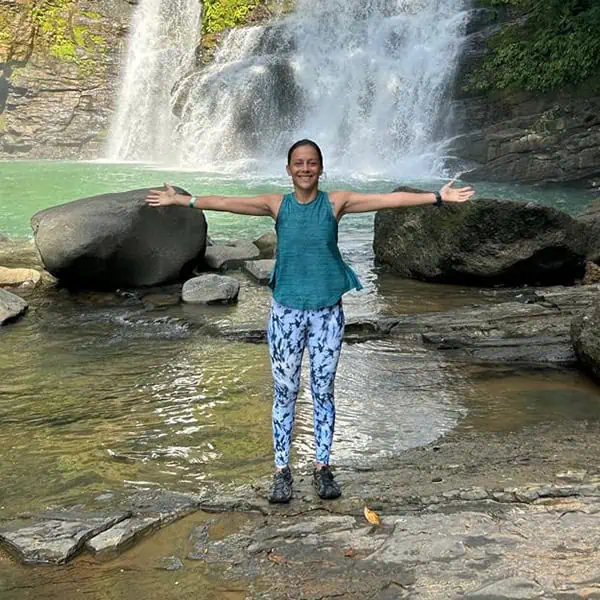
Arlet Quiros Calvo

Cara McGary
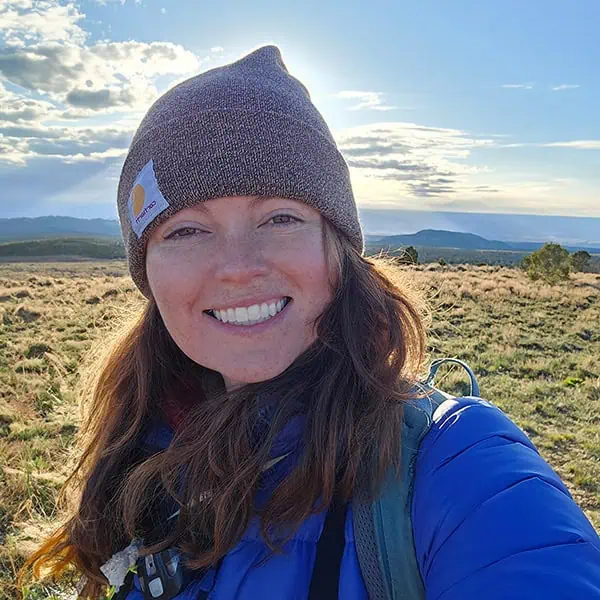
Carly Crow
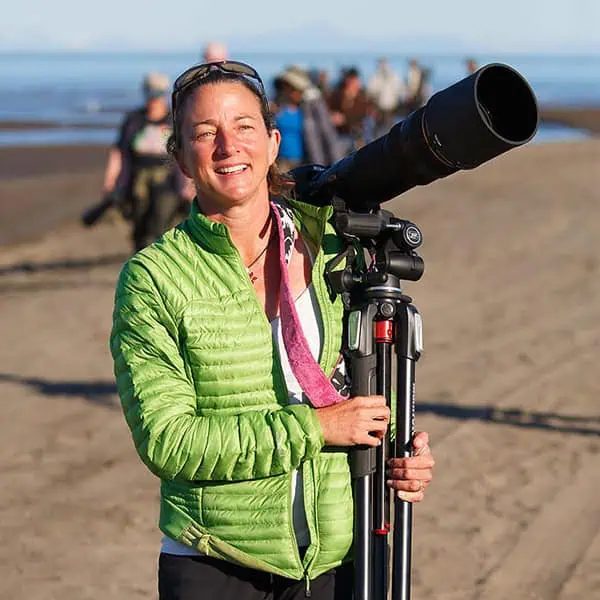
Michelle Theall

Naara Arroyo
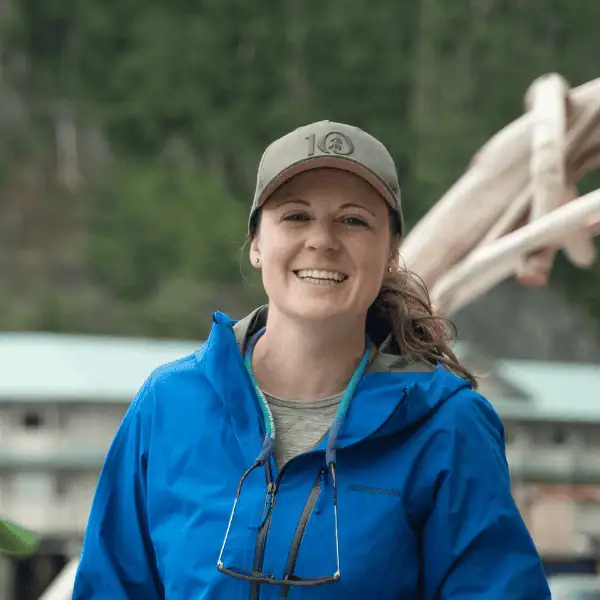
Pam McGarel
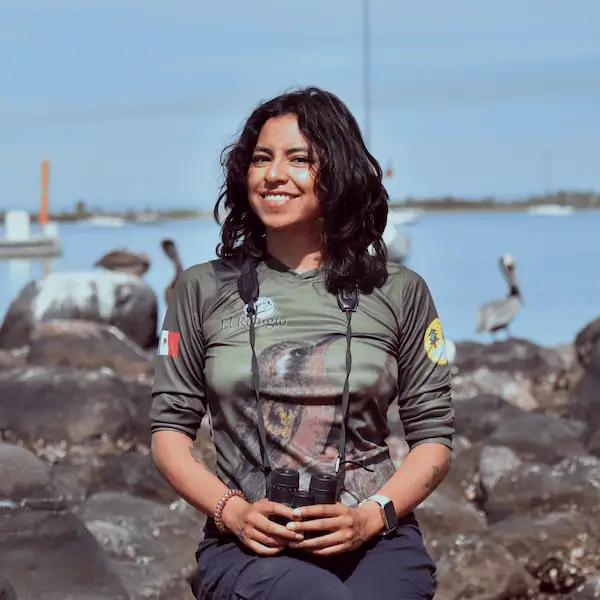
Pamela García
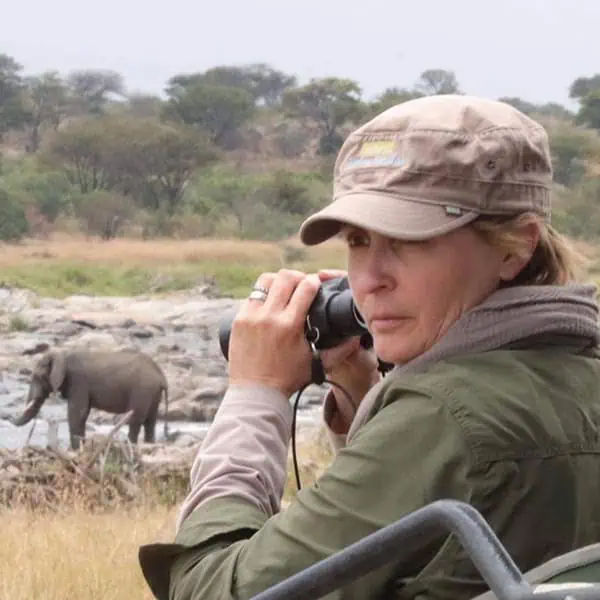
Sheridan Samano
What Women Say About Her Wild Life’s Central America Expeditions
Frequently Asked Questions — Wildlife Tours Central America for Women
What Central America destinations does Her Wild Life currently offer?
Her Wild Life currently operates in Costa Rica on the Osa Peninsula, led by resident biologist and field ornithologist Arlet Quirós Calvo. For women looking for authentic adventure trips for women in Central America, we are expanding our portfolio. Check the expeditions page for all current and upcoming departures.
How is the Osa Peninsula different from Arenal, Monteverde, or Manuel Antonio?
Arenal, Monteverde, and Manuel Antonio are excellent and well-developed Costa Rica destinations. The Osa Peninsula is different in character: the forest is primary and largely undisturbed, species density is significantly higher, and the probability of encountering Baird’s tapir, all four monkey species, and the full range of cat species is greater than in the mainstream tourist corridor. The Osa requires more logistical commitment than a standard Costa Rica itinerary. A Her Wild Life expedition with Arlet Quirós Calvo handles all of that.
Who is Arlet Quirós Calvo and why does the guide matter here?
Arlet Quirós Calvo is a resident biologist and field ornithologist who has spent years documenting the biodiversity of the Osa Peninsula. Her knowledge of species activity patterns, fruiting tree locations, wildlife trail systems, and seasonal behavior is built from sustained field work in the same forest rather than regular visits. The difference between a good wildlife trip and an extraordinary one is almost always the guide. Arlet is the reason Her Wild Life operates on the Osa Peninsula specifically.
What large mammals can I realistically expect to see?
All four monkey species are reliably encountered on every expedition with Arlet. Baird’s tapir is possible with the right timing and field knowledge: not guaranteed on any specific day, but significantly more probable with a guide who knows tapir trail systems on the Osa than without one. Coatis are commonly seen. Kinkajous and ocelots are possible on night walks. Jaguar encounters are rare. Arlet will tell you honestly on each field day what is realistic given the conditions and recent activity patterns in the areas you are visiting. Her Wild Life does not over-promise wildlife encounters.
Is this expedition suitable for birders?
Yes, strongly. Arlet is a field ornithologist and the Osa Peninsula hosts nearly 500 bird species including scarlet macaws, multiple toucan species, hummingbirds, raptors, and both resident and migratory populations. The resplendent quetzal is possible in appropriate habitat and season. Birders who have completed standard Costa Rica itineraries will find the Osa Peninsula led by a resident ornithologist a significantly deeper experience.
Is solo female travel in Central America safe on a Her Wild Life expedition?
All transfers and field movements are managed by Arlet and the Her Wild Life team. Participants are never navigating Costa Rica or Central America independently. The expedition moves between specific accommodations and field sites under expert guide management. Costa Rica has a well-developed tourism infrastructure and strong environmental protection framework. Her Wild Life has operated solo travel trips for women in Costa Rica with an established safety record.
What is the weather like and what should I prepare for?
The Osa Peninsula is tropical: warm and humid year-round, with afternoon showers that can be heavy even in the dry season. Temperatures range from the mid-70s to low 90s Fahrenheit. The wet season brings sustained and sometimes intense rainfall that affects trail conditions. The dry season (December to April) is more suitable for first-time visitors. Arlet times field days to manage heat, typically with early starts before the hottest part of the day.
How is Her Wild Life different from other central america wildlife tours?
Three specific differences. Her Wild Life’s Costa Rica expedition is led by Arlet Quirós Calvo, a resident biologist on the Osa Peninsula whose field expertise is specific to this ecosystem. The expedition is women-only and runs with a group of up to 10 women, meeting Corcovado National Park’s group size requirements while allowing the pace of observation that serious wildlife travel requires. And private rooms are included with no single supplement. Most Costa Rica operators charge a single supplement. Her Wild Life does not.
Jane M
May 23, 2025

My recent trip to Costa Rica was incredible. The country was easy to navigate and felt very safe throughout. Wildlife sightings were a daily delight—howler monkeys, spider monkeys, and capuchins were everywhere, and sloths could often be seen lounging high in the trees. One of the most unforgettable moments was watching a pair of Resplendent Quetzals take turns at their nest—absolutely breathtaking. The sheer variety of hummingbirds was mind-boggling and a joy to witness. With a captivating guide and the company of good friends, the experience was both enriching and unforgettable.
Ready to Experience Central America’s Wild?
Women-only. Expert female naturalists. Private rooms always included. The most ecologically significant rainforest destinations in the neotropical region, at the field biology depth they deserve.
Right now, we are in Costa Rica on the Osa Peninsula. Primary rainforest, nearly 500 bird species, four monkey species, and Arlet Quirós Calvo leading every field day. Get in touch and we will take it from there.