


Canada Wildlife Tours for Women — Bears, Orcas, and the Wild BC Coast
Every fall, coastal grizzlies wade into the Broughton Archipelago’s tidal channels as the salmon return. The orcas are offshore. The humpbacks are feeding in the passages.
Canada wildlife tours take many forms. Her Wild Life operates on the British Columbia coast, in the Broughton Archipelago, where the fall salmon run draws coastal grizzly bears to the tidal channels, concentrates orcas and humpback whales in the outer coastal waters, and creates one of the most ecologically rich wildlife experiences in North America. This is not the Rockies. It is the BC coast at the moment the whole ecosystem responds to the salmon.
Our Canada wildlife tours are women-only, small-groups, and led by an expert female naturalist who knows this coastline at field biology depth. The expedition is boat-based, moving through the ancient tidal channels of the Broughton Archipelago by vessel. Your own private room is always included. No single supplement.
Nearly 20 years of conservation travel | Official ZEISS Optics Partner | A Reefs to Rockies Brand

Why Canada
Canada’s Pacific coast is one of the most ecologically productive marine environments on Earth. Cold, nutrient-rich Pacific waters meet the temperate rainforest of the BC coast in a system where ocean productivity and terrestrial ecosystems are directly connected. The mechanism of that connection is the salmon. Every fall, Pacific salmon return from the ocean in numbers that feed coastal grizzly bears, bald eagles, wolves, and the marine mammals of the outer coast. The nutrients the salmon carry from the ocean into the rivers and forests transform the surrounding landscape, fertilizing trees and building the biomass of the coastal rainforest from the sea up.
Her Wild Life’s Canada nature tours operate in the Broughton Archipelago, where the tidal channels provide access to grizzly bear feeding sites by boat, and where the outer coastal waters host orcas, humpbacks, and Dall’s porpoises in the same seasonal window. This is wildlife travel built around an ecological event: the salmon run that drives the entire coastal food web in fall.
When to Go: Wildlife Timing in Canada
The fall salmon run is the ecological engine of the Her Wild Life Canada expedition. Coastal grizzlies are most visible and most active from late summer through fall as the salmon return to the river mouths and tidal channels. Marine mammals concentrate in the outer coastal waters during the same season. Her Wild Life schedules the Canada departure to the peak of the salmon run, when the wildlife convergence in the Broughton Archipelago is at its richest.
What Makes Canada Different From Other Wildlife Destinations
The Broughton Archipelago offers something ecologically specific: a landscape where marine and terrestrial wildlife are not separate experiences but parts of the same system observed from the same boat on the same day. A coastal grizzly bear fishing a tidal channel, an orca pod moving through a coastal passage, a humpback surfacing in the narrow waterway between forested islands. These encounters do not require traveling between separate locations. They happen within the same ecosystem, on the same water, within the same field day.
Her Wild Life Canada Expeditions — Women-Only, Wildlife-First
Her Wild Life currently operates one Canadian expedition, in the Broughton Archipelago on the BC coast.
Vancouver Island, Canada
A boat-based wildlife expedition in the tidal channels and coastal waters of the Broughton Archipelago, British Columbia. Coastal grizzly bears on the fall salmon run, orcas, humpback whales, bald eagles, Dall’s porpoises, and the ancient First Nations cultural landscape of one of Canada’s most spectacular and least-visited coastlines.
Location: Campbell River, Telegraph Cove, Alert Bay
Group: Up to 6 women | Private room included | No single supplement
Wildlife You’ll Encounter on Our Canada Expeditions
Canada’s Pacific coast supports a concentration of large, charismatic wildlife in a single seasonal window that has few equivalents in the world. The species below are the field biology encounters that the current Canada expedition is designed and timed around.
Coastal Grizzly Bear (Ursus arctos horribilis) — Broughton Archipelago, BC, Fall
Coastal grizzlies in the Broughton Archipelago access tidal channels by boat, fishing the fall salmon run in a landscape where marine and terrestrial ecosystems meet. The same salmon that feeds the bears carries oceanic nutrients into the forest.
Read more: Coastal grizzly ecology, the salmon-to-forest nutrient transfer, and boat-based observation
Coastal grizzlies are behaviorally and ecologically distinct from their interior counterparts. They access fish-rich tidal channels and river mouths on a coastline shaped by ancient glaciation, navigating terrain that is simultaneously marine and terrestrial. During the fall salmon run, individual bears may consume tens of thousands of calories daily in a state of hyperphagia: the physiological imperative to accumulate fat reserves before winter denning. The salmon carcasses they leave behind at river mouths and forest edges carry marine-derived nitrogen deep into the coastal rainforest. Studies have found oceanic nutrients in the growth rings of trees far from any river, transferred by bear foraging behavior across the line between sea and land. Observing grizzlies from a vessel in the tidal channels of the Broughton Archipelago allows close, natural observation without approaching on foot in ways that would alter their feeding behavior.
Orca (Orcinus orca) — BC Coastal Waters, Fall
British Columbia’s coastal waters host both resident and transient orca populations. Resident orcas are among the most studied wild animal populations in the world: long-lived, family-structured, and deeply dependent on Chinook salmon.
Read more: The two orca populations of BC, their ecology, and conservation context
BC coastal waters host two ecologically and behaviorally distinct orca populations. Resident orcas are fish-eating, acoustically complex, and organized into stable matrilineal family groups that maintain lifelong bonds. Their primary prey is Chinook salmon. Individual resident orcas have been identified and tracked over decades, and their social structures, communication systems, and foraging behaviors are documented in extraordinary scientific detail. Transient orcas, by contrast, are marine-mammal hunters: quieter, wider-ranging, and organized in smaller groups. They hunt seals, sea lions, and occasionally porpoises in the coastal waters of BC. The conservation context for BC’s resident orca populations is pressing: the Southern Resident population is classified as Endangered under Canada’s Species at Risk Act, with declining Chinook salmon stocks, vessel noise, and environmental contaminants all identified as contributing threats. The health of the orca population and the health of the salmon run are directly connected. Traveling with Her Wild Life in the Broughton Archipelago in fall is to be in that ecosystem at the moment when the salmon connection is most visible.
Humpback Whale (Megaptera novaeangliae) — BC Coastal Waters, Fall
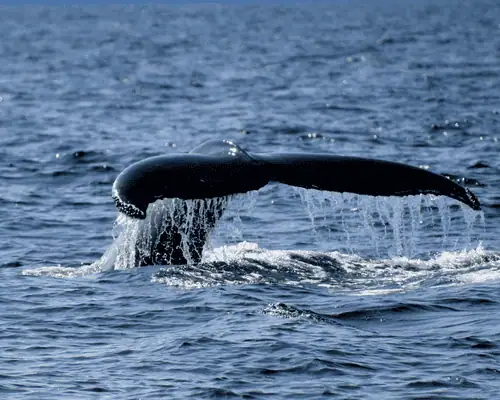
Humpback whales have returned to BC coastal waters in significant numbers following decades of commercial whaling protection. Watching bubble-net feeding behavior in the narrow forested channels of the Broughton Archipelago is one of the most distinctive wildlife experiences available in Canada.
Read more: Humpback whale feeding ecology and the significance of their recovery in BC waters
Humpback whales were commercially hunted to near-extinction in the North Pacific. By the late 1960s, populations had been reduced by an estimated 95 percent. Their return to BC coastal waters in significant numbers over the past few decades is one of the clearest examples of marine species recovery following protection. Humpbacks are cooperative foragers in some populations, using bubble-net feeding: coordinated groups spiral upward while releasing columns of rising bubbles that concentrate schooling fish at the surface, then lunge through the center with mouths open. In the Broughton Archipelago’s narrow forested channels, a boat-based observer positioned correctly can watch this behavior at close range in a setting that has no equivalent at any other wildlife destination in North America.
Bald Eagle (Haliaeetus leucocephalus) — BC Coast, Fall
During the fall salmon run, bald eagles concentrate along Broughton Archipelago waterways in large numbers, feeding on salmon carcasses left by bears and on live fish in shallow tidal channels. They are part of the same nutrient web as the grizzlies and the orcas.
Read more: Bald eagle ecology and their role in the salmon run food web
Bald eagles are scavengers and predators of significant ecological importance in the coastal BC food web. During the fall salmon run, they concentrate along river mouths and tidal channels in numbers that can reach dozens of individuals in a single visible stretch. They feed on salmon carcasses left by bears, on weakened or dying salmon in shallow water, and on the invertebrates that gather around decomposing fish. In doing so, they distribute marine-derived nutrients further inland and upslope than bears alone. A line of bald eagles perched in the alders above a tidal channel during the peak of the salmon run is one of the defining visual experiences of a fall Broughton expedition.
First Nations Cultural Landscape — Broughton Archipelago
The Broughton Archipelago is the traditional territory of the Kwakwaka’wakw peoples. The cultural history of this coastline is embedded in the landscape in ways that add ecological and historical depth to the wildlife experience.
Read more: First Nations connection to the Broughton Archipelago and how Her Wild Life approaches this context
The Broughton Archipelago has been inhabited, managed, and deeply understood by Kwakwaka’wakw peoples for thousands of years. The salmon run that draws grizzlies and orcas to these waters today is the same salmon run that has sustained coastal First Nations communities across generations. The ecological knowledge embedded in this coastline, about the relationships between salmon, bears, eagles, forests, and the tidal rhythms of the archipelago, is ancient and specific. Her Wild Life approaches this cultural context with respect and specificity. The expedition does not treat First Nations heritage as a tourist attraction. It acknowledges that the landscape you are traveling through has a human history as deep as its ecological one.
Wildlife Photography in Canada — Boat-Based, Coastal, and Field Biology-Led
Canada wildlife photography tours on the BC coast present a specific set of conditions. You are on a vessel in tidal channels and open coastal water, photographing subjects that range from a grizzly bear fishing at the shoreline to an orca surfacing fifty meters from the bow. The distances are variable, the light on the water changes fast, and the most significant moments, a grizzly bear catching a salmon in clear shallow water, an orca rolling through a surface feeding run, happen at the pace of the animal, not the schedule.
The guide’s field biology knowledge is what puts the boat in the right position before those moments happen. She reads the tidal channels and the bear behavior in the same way a field biologist reads a landscape: by what is moving, what the current is doing, and where the salmon are concentrating. Wildlife photography tours in Canada on the BC coast are less about camera technique and more about ecological knowledge. Her Wild Life brings ecological knowledge.
Photography From a Vessel — What to Expect
Boat-based wildlife photography on the BC coast requires flexibility. The vessel positions relative to wildlife in ways that change with the tide, the animals’ movement, and the available light. Waterproof protection for equipment is important on the water. Telephoto reach is useful for bears at the shoreline and marine mammals at a distance, but the intimacy of the Broughton Archipelago’s narrow channels means that many encounters happen at closer range than most open-water marine wildlife experiences.
Solo Female Travel Canada — Women-Only, Expert-Led, On the Wild BC Coast
Canada solo female travel on the BC coast with Her Wild Life is a different kind of solo trip. You arrive in the Broughton Archipelago not knowing the other women on the expedition. By the time the first grizzly bear appears in the tidal channel twenty meters from the vessel on the first morning, that has changed. There is something specific about watching large wildlife from a small boat in a remote coastal channel with a group of women who chose the same expedition for the same reasons. The shared experience of the wildlife is immediate and equalizing.
Every logistics decision from arrival to departure is managed by the guide team. You are never navigating coastal BC independently. The vessel, the field schedule, the accommodation, and the access to wildlife sites are all handled. Canada solo female travel with Her Wild Life means being present for the wildlife, not managing the journey toward it.
Private Rooms Included — No Single Supplement
Every Her Wild Life Canada departure includes a private room in the trip price. You are not charged extra for traveling alone. In either case, your own space is standard and included.
Up to 6 Women. The Right Size for a Vessel in Coastal Wildlife Habitat.
Her Wild Life Canadian expeditions run with up to a group of 6 women. On a vessel in the Broughton Archipelago, a small group allows the guide to position the boat quietly near wildlife without disturbance, to stop for extended observation at any site, and to give every woman on board the same quality of view.
“The salmon feeds the bears. The bears feed the forest. The forest holds the watershed that brings the salmon back. You are entering a system that has been running this way for thousands of years.”
Expert Women Who Know Canada’s Wild Places
Her Wild Life Canada expeditions are led by women who know their specific ecosystems in depth. The guide who leads the Broughton Archipelago expedition reads the tidal channels and the bear behavior of this coastline the way a field biologist learns a landscape: by returning to it across seasons until the patterns become readable and the right position before a wildlife encounter becomes instinct rather than guess.
Her Wild Life guides bring diverse backgrounds, global perspectives, and a shared love of adventure to every expedition. In Canada, they bring the specific knowledge of a coastline where marine and terrestrial wildlife are not separate categories but parts of the same living system.
Conservation in Canada — What We Support and What That Means
A conservation donation is made on behalf of every woman who travels with Her Wild Life. On the BC coast, that contribution is connected to active conservation work on the species and ecosystems the expedition is built around. BC’s Southern Resident orca population is classified as Endangered under Canada’s Species at Risk Act. The primary drivers of their decline are Chinook salmon depletion, vessel noise in key foraging areas, and environmental contaminants accumulated through the food chain. The health of the orca population is a direct function of the health of the salmon run. Traveling in the Broughton Archipelago at peak salmon run season, with a conservation-centered operator, is a direct contribution to the monitoring, awareness, and advocacy work that addresses both.
Specific, Accountable Conservation Practice.
Her Wild Life brings nearly twenty years of conservation-centered, sustainable travel to every expedition. Every wildlife encounter is structured around responsible viewing protocols specific to the species and setting. Her Wild Life follows Canada’s federal and provincial guidelines for marine wildlife observation, and applies its own field biology standards on top of those.
Responsible Wildlife Viewing on the BC Coast
Orca and humpback whale observation follows Transport Canada and Department of Fisheries and Oceans approach distance guidelines, with engine protocols designed to minimize acoustic disturbance to foraging animals. Coastal grizzly observation from the vessel maintains safe distances that protect natural feeding behavior. In both cases, responsible viewing is what makes natural behavior observable: a bear that has not been disturbed at a salmon run continues fishing. A whale that has not been pressured by vessel approach continues feeding. The protocol serves the experience as much as it serves the animal.
Planning Your Canada Wildlife Trip — What to Know
Best Time to Visit Canada for Wildlife
The Her Wild Life Canada expedition runs in fall, timed to the peak of the salmon run in the Broughton Archipelago. Coastal grizzlies are most active and most visible at this time. Marine mammals are concentrated in the outer coastal waters. The autumn light on the BC coast has a quality specific to this season.
Read more: Why fall is the right window for the BC coast expedition
The fall salmon run is the ecological event around which the entire BC coastal food web organizes itself. Pacific salmon returning from the ocean in late summer and fall draw grizzly bears from the forest to the river mouths and tidal channels, concentrate eagles in the tree lines above, and support the marine mammals of the outer coast as the salmon move through the channels toward their spawning grounds. The specific timing of the run varies by salmon species and by watershed, but the peak of grizzly bear activity in the tidal channels of the Broughton Archipelago occurs in the same seasonal window each year. Her Wild Life schedules the departure to this peak.
Activity Level and Physical Requirements
The Vancouver Island expedition is primarily boat-based. The physical demands are those of a coastal marine environment: variable weather, cool to cold fall temperatures on the water, and some walking when going ashore at wildlife sites. Moderate general fitness and the ability to manage time on the water in variable BC coastal conditions is what is required.
Read more: What to physically expect on the BC coast expedition
The expedition involves extended time on the water in a vessel moving through tidal channels and coastal passages. Fall on the BC coast brings cool temperatures, variable cloud and rain, and the possibility of chop on exposed coastal sections. Seasickness is worth considering for anyone who has experienced it in other marine environments: the Broughton Archipelago’s channels are relatively sheltered compared to open ocean, but conditions vary. Going ashore at grizzly bear observation sites or coastal landings involves walking on uneven shoreline terrain. The physical effort involved in the expedition is moderate. The environmental conditions require appropriate clothing and preparation.
What to Pack for the BC Coast in Fall
Waterproof outer layers are essential: a waterproof jacket and trousers for time on the water in fall conditions. Warm mid-layer for cool mornings and evenings. Rubber-soled non-slip footwear for the vessel deck. Binoculars for coastal wildlife observation. Reef-safe sunscreen. Her Wild Life provides departure-specific packing guidance when you book.
Read more: Full packing guidance for the Vancouver Island expedition
Waterproof and windproof outer layers are the most important items for the BC coast in fall. A waterproof jacket rated for sustained rain is not optional. Waterproof trousers are useful for extended time on the vessel in wet conditions. A warm fleece or down mid-layer handles the cool mornings and evenings of fall on the coast. Rubber-soled non-slip footwear is needed for safe movement on vessel decks when wet. Binoculars suited to marine wildlife observation, waterproof, with appropriate magnification for subjects at variable range, are strongly recommended. A dry bag protects camera equipment from spray and rain on the water.
Expert Women Who Know Canada’s Wildlife
Arlet Quiros Calvo

Cara McGary
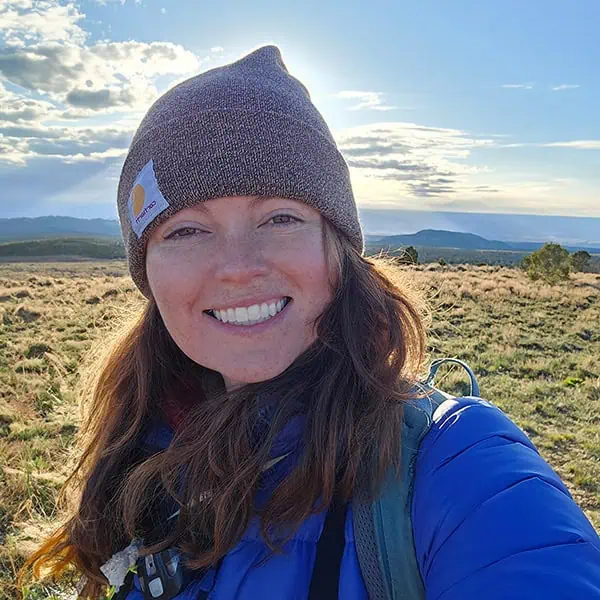
Carly Crow
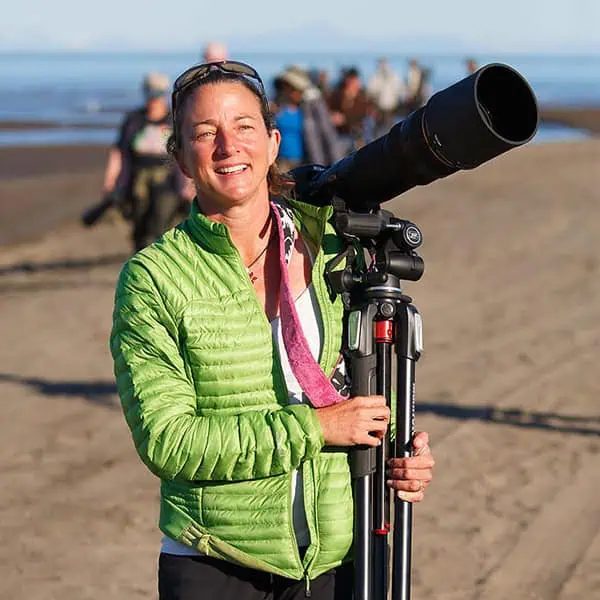
Michelle Theall
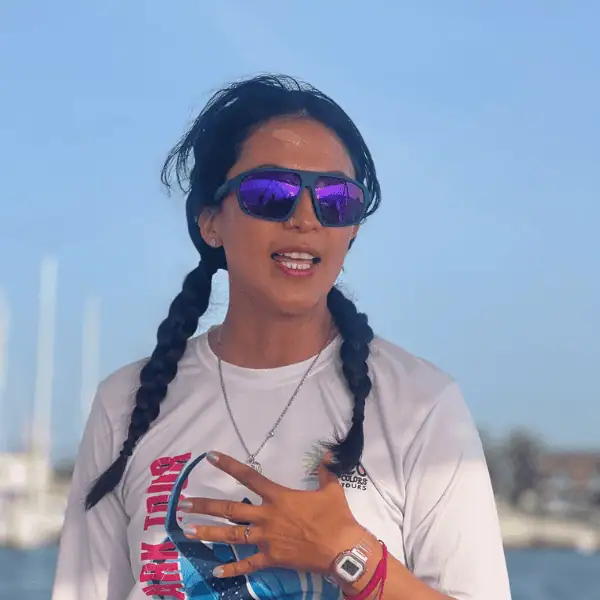
Naara Arroyo
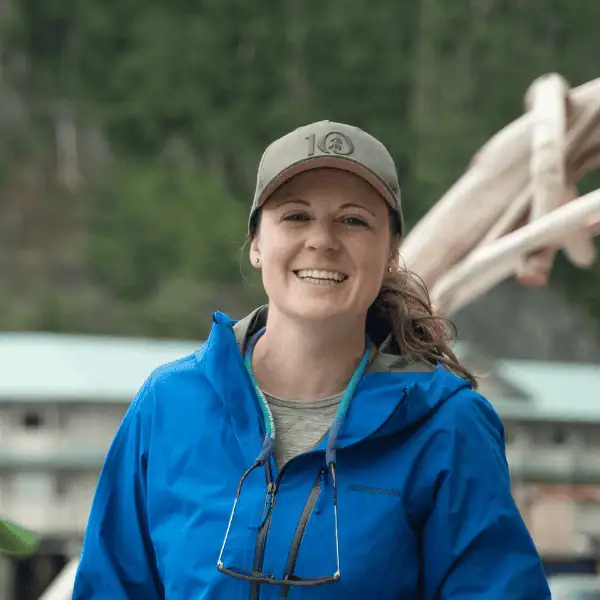
Pam McGarel
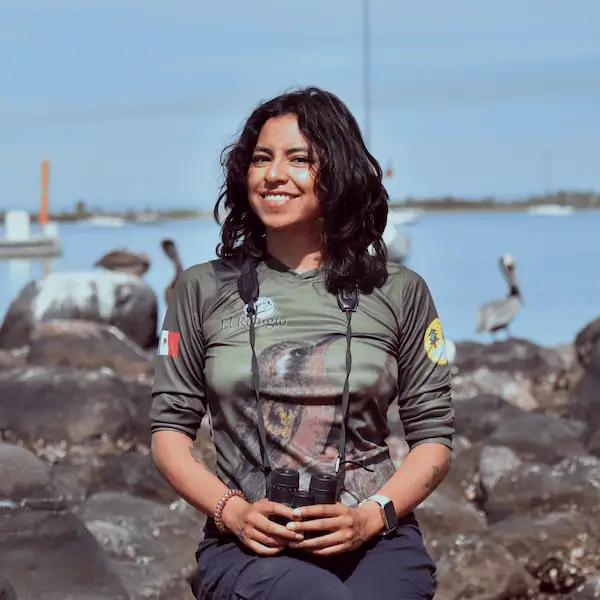
Pamela García
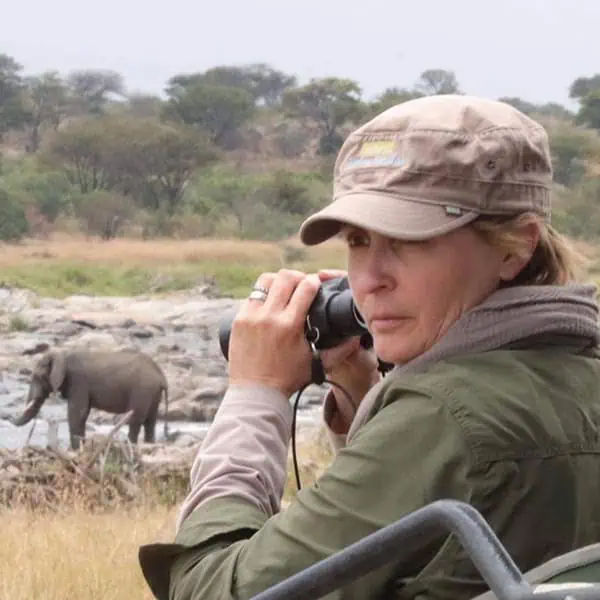
Sheridan Samano
What Women Say About Her Wild Life’s Canadian Expeditions
Frequently Asked Questions — Canada Wildlife Tours for Women
What Canadian destinations does Her Wild Life currently offer?
Her Wild Life currently operates in the Broughton Archipelago on the BC coast, on a boat-based fall wildlife expedition. We are expanding our Canada portfolio. Check the expeditions page for all current and upcoming departures.
Is this a Vancouver Island tour or a Broughton Archipelago expedition?
The expedition operates in the Broughton Archipelago, which is accessed via Vancouver Island on the BC coast. It is a boat-based wildlife expedition in the tidal channels and coastal passages of the archipelago, not a land-based tour of Vancouver Island itself. The Broughton Archipelago is a network of islands and channels on the northern coast of Vancouver Island, one of the most ecologically intact and least-visited sections of the BC coast.
What wildlife can I realistically expect to see on the Canada expedition?
Coastal grizzly bears are reliably encountered at tidal channel feeding sites during the fall salmon run. Bald eagles concentrate in large numbers at the same sites. Orcas and humpback whales are possible in the outer coastal waters during fall, with sightings varying by season and conditions. Dall’s porpoises are frequently encountered. Coastal birds, including great blue herons, various duck species, and shorebirds, are reliably present. Her Wild Life does not guarantee specific sightings but schedules the expedition to the biological window when each species is most active and most accessible.
Is this expedition suitable for women who have never been on a boat-based wildlife trip?
Yes. The Broughton Archipelago’s tidal channels are relatively sheltered compared to the open ocean, making the vessel experience accessible to women without prior marine travel experience. Seasickness is a factor worth considering if you have experienced it in other contexts. The guide team will advise on practical preparation before the trip. The expedition does not require any prior boating experience or marine knowledge. Your job is to observe the wildlife. The guide and vessel crew handle everything else.
When is the best time to visit Vancouver Island for wildlife?
For the specific wildlife of the Broughton Archipelago, the best time is fall, when the Pacific salmon are returning to the coastal river mouths and tidal channels. This is when coastal grizzlies are most visible and most behaviorally active, when the eagle concentrations at salmon feeding sites are at their peak, and when the marine mammals of the outer coast are most concentrated in the region. Her Wild Life schedules the expedition to this window specifically.
Are there humpback whale trips for women in Vancouver waters?
Yes. Her Wild Life puts you on the water specifically for encounters like this. Humpback whale trips for women in Vancouver Island’s outer coastal waters, with observation built into the boat-based wildlife experience through the Broughton Archipelago region. Humpback whales have returned to BC coastal waters in significant numbers following decades of commercial whaling protection, and the Broughton Archipelago’s forested channels and coastal passages provide one of the most striking settings for humpback observation available in Canada. Encounters are not guaranteed on any specific day but are possible within the fall expedition window.
Is solo female travel in Canada safe on a Her Wild Life expedition?
All transfers and field movements are managed by the guide team. Participants are never navigating BC coastal Canada independently. The expedition moves between specific field sites and accommodations under expert guide management throughout. Canada is one of the most rewarding destinations for women’s adventure travel, and the expedition structure removes the logistical complexity of navigating a remote coastal region independently.
What is the First Nations cultural context of the expedition?
The Broughton Archipelago is the traditional territory of the Kwakwaka’wakw peoples, whose relationship with this coastline, its salmon runs, its marine life, and its forests extends across thousands of years. Her Wild Life approaches this cultural context with respect and specificity, acknowledging that the landscape you are traveling through has a human history as deep and significant as its ecological one.
What makes Canada's BC coast different from other Canadian wildlife destinations?
Most Canadian wildlife travel focuses on the Rocky Mountains: Banff, Jasper, and the national park circuit. The BC coast is a completely different ecological proposition. The Broughton Archipelago operates at the interface of marine and terrestrial ecosystems, where the productivity of the Pacific Ocean drives the behavior of the bears, eagles, and wolves of the coastal rainforest through the mechanism of the salmon run.
Ready to Experience Canada’s Wildlife?
Women-only. Expert female naturalists. Private rooms always included. Canada wildlife tours built around the ecological events that drive the BC coast in fall.
Right now, we are in the Broughton Archipelago, where the salmon are running, the grizzlies are in the tidal channels, and the orcas are moving through the coastal passages. Small group, expert guide, your own room at the end of every day on the water.