

The Osa Peninsula holds roughly half of Costa Rica’s species across just 3 percent of the country’s land, which is why National Geographic has called it the most biologically intense place on Earth. Costa Rica has protected more than 25 percent of its own land area in national parks and biological reserves, a higher share than almost any other country, and the Osa is where that protection shows most clearly. Here is what you can expect from Osa Peninsula wildlife on a women-only wildlife expedition in Costa Rica, and how it changes with the season.
Why the Osa Peninsula Is Central America’s Biodiversity Hotspot
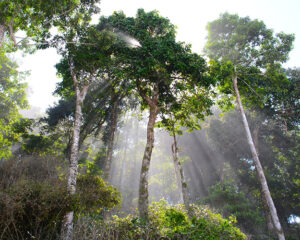
The Osa sits at the meeting point of North and South America, a land bridge where species from both continents have moved, mixed, and evolved for millions of years. That history is why Costa Rica’s biodiversity concentrates so heavily in this single peninsula, and why a single morning walk through primary rainforest here produces more species observations than most wildlife destinations offer across an entire trip. Corcovado National Park, the largest remaining primary rainforest on the Pacific coast of the Americas, sits at the heart of the region, and entry requires a certified guide, which keeps daily visitor numbers and the disturbance to wildlife low.
Osa Peninsula Birds, Scarlet Macaws, Quetzals, and Nearly 500 Species
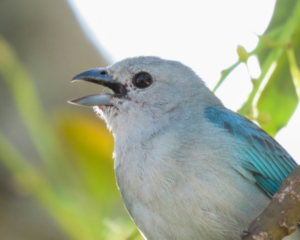
The Osa Peninsula holds one of the highest densities of scarlet macaws in Costa Rica, and they move through the primary forest canopy in mated pairs, a reliable sign of an intact, functioning ecosystem. In the cloud forest margins near San Gerardo de Dota, the resplendent quetzal draws birders from across the world, and field ornithologist Carly Crow knows the fruiting trees and nesting sites where quetzals are most likely to appear. Across the wider region, nearly 500 bird species have been recorded, which is part of why this expedition pairs so naturally with women who already think in field guide terms about what they are seeing.
Costa Rica Osa Peninsula Animals, Baird’s Tapir and Four Species of Monkey
The Osa Peninsula is one of the few places in Costa Rica where all four native monkey species can be reliably encountered, including the Central American squirrel monkey, a species classified as Vulnerable with a range restricted almost entirely to this stretch of Pacific coast. Baird’s tapir, the largest native land mammal in Central America and also classified as Endangered, holds one of its highest density populations anywhere in the region right here. Resident biologist Arlet Quirós Calvo has spent years learning where in this Costa Rica rainforest wildlife is most likely to be, which is what turns a walk into a genuine field expedition rather than a hopeful stroll.
Sea Turtle Nesting in Costa Rica, the Osa Coast
Along the Osa Coast, the community-driven COPROT Tortugas de Osa project protects nearly five miles of beach that serve as critical sea turtle nesting grounds for olive ridley and Pacific green sea turtles, documenting more than 7,000 nests each season. A conservation donation supporting COPROT’s work is made on behalf of every woman who travels with Her Wild Life to Costa Rica, so your presence on this expedition is tied directly to the nesting beaches you are here to see.
Best Time to Visit for Wildlife
Wildlife timing on the Osa Peninsula shifts with the season. The dry season, from December through April, offers the clearest trails and the best visibility for spotting monkeys and other mammals moving through the forest. The wet season brings sea turtle nesting and peak amphibian diversity, including the poison dart frogs that live across the Osa’s forest floor and serve as a direct indicator of ecosystem health. Her Wild Life’s Costa Rica expedition runs in August, during the green season, which means muddier trails and regular rain, alongside the sea turtle nesting activity that season brings. Click here to learn more about the best time to visit Costa Rica for wildlife.
How to plan a trip to see wildlife in Costa Rica as a woman?
Ready to see the Osa Peninsula’s biodiversity for yourself? Explore our women’s wildlife expedition in Costa Rica, part of our wider Central America wildlife expeditions for women, and find out what nearly 500 bird species and four monkey species look like from the ground.