

Bird watching is the practice of observing birds in their natural habitat, paying attention to species, behavior, calls, and movement. It is one of the most accessible wildlife activities in the world. You do not need experience, specialist equipment, or a long checklist to begin. You need curiosity, a reasonable pair of binoculars, and the willingness to be outside early. Here is what beginner bird watching actually involves and how to build from your first outing.
What You Actually Need to Start Bird Watching
The core kit for bird watching for beginners is a pair of binoculars and a field guide. Binoculars in the 8×42 range give you a wide field of view and enough light-gathering to work well at dawn and dusk, which is when birds are most active. A regional field guide helps you narrow down what you are looking at without searching through hundreds of irrelevant species.
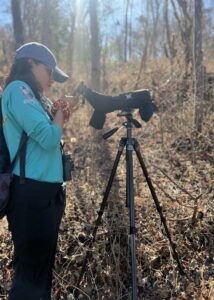
How to Use Binoculars for Bird Watching
The most common beginner mistake when using binoculars for bird watching is looking through the binoculars before locating the bird with the naked eye. Find the bird first, fix your gaze on it, then raise the binoculars to your eyes without shifting your focus point. Practice this until it is automatic. The other adjustment worth making early is the diopter setting, the small individual focus ring on one barrel that corrects for the difference between your eyes. Set it once correctly, and your binoculars will work far better in the field.
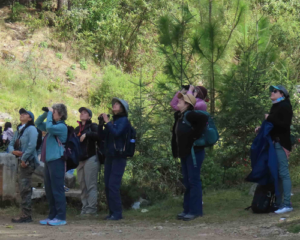
How to Identify Birds in the Field
Identification starts with shape and size before color. A bird’s silhouette, bill shape, and behavior pattern are more reliable than plumage, which varies by season, age, and light conditions. Field ornithologists learn to read posture and movement as quickly as markings. Note what the bird is doing, where it is feeding, and how it moves. Calls are often the fastest identification tool in dense habitat where the bird itself is not visible.

Why Women’s Birding Expeditions Are the Best Way to Learn
Guided birding accelerates everything. A field biologist leading a small group hears and sees things a solo beginner will walk past entirely, and explains the ecological context behind what you are watching rather than just naming the species. The birding expedition in Nebraska for women puts you at one of the greatest migratory wildlife events in North America, guided by an expert ornithologist. For birding in a desert landscape with a completely different species set, the New Mexico birding for women expedition covers sandhill cranes, raptors, and endemic species across one of the country’s most distinctive birding regions.
If you are ready to move from backyard birding to something more serious, a guided expedition is the fastest way to build your skills.