
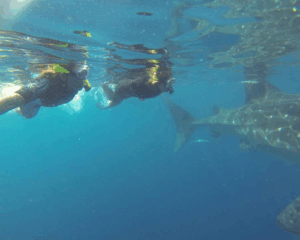
Whale sharks are the largest fish on Earth. The largest individual reliably recorded measured 18.8 metres, just over 61 feet. Most adults average around 12 metres and weigh approximately 15 tons. To put that in perspective, the average school bus is about 12 metres long. When you swim with whale sharks in Mexico, you are in the water alongside an animal the size of the vehicle that brought you to school.
How Long Do Whale Sharks Grow?
The maximum size of whale sharks is not precisely known because very large individuals are rarely encountered and difficult to measure accurately. Scientific records put the upper end at around 18 to 19 metres, with most of the animals measured in studies falling between 8 and 12 metres. Juveniles of 3 to 4 metres are also encountered at feeding aggregations. Whale sharks grow slowly and reach sexual maturity at around 30 years old. Their estimated lifespan is 80 to 130 years, based on studies of vertebral growth bands, making them one of the longest-lived fish species known.
Their skin alone is worth noting. It can be up to 10 – 15 centimetres thick, the thickest of any living animal, reinforced with tiny tooth-like structures called dermal denticles that reduce drag in the water. The skin is dark grey with a pattern of pale spots and stripes that is unique to each individual, the same way a fingerprint is unique to a person.
How Do Whale Sharks Compare to Other Large Marine Animals?
Whale sharks are the largest fish, but they are not the largest animals in the ocean. Blue whales hold that title. The largest blue whale ever recorded measured 33 metres, almost twice the length of the largest measured whale shark. The key distinction is that whales are mammals and breathe air. Whale sharks are fish, extracting oxygen from the water through five large pairs of gills. The name comes from the animal’s size and its filter-feeding behavior, which is similar to how baleen whales feed, not from any biological relationship between the two.
What It Actually Feels Like to Swim Next to One
Most people who have been in the water with whale sharks describe the experience the same way. The size does not fully register until the animal is alongside you. A mouth nearly five feet across. A tail wider than most people are tall. And an animal that is entirely indifferent to your presence, moving at its own pace through the water. Her Wild Life guides position their groups alongside the mid-section of the animal, where you get the clearest view of the spotted flank and the full sweep of the body. For more on what these animals are and how they behave in the water, see our whale shark expedition page.